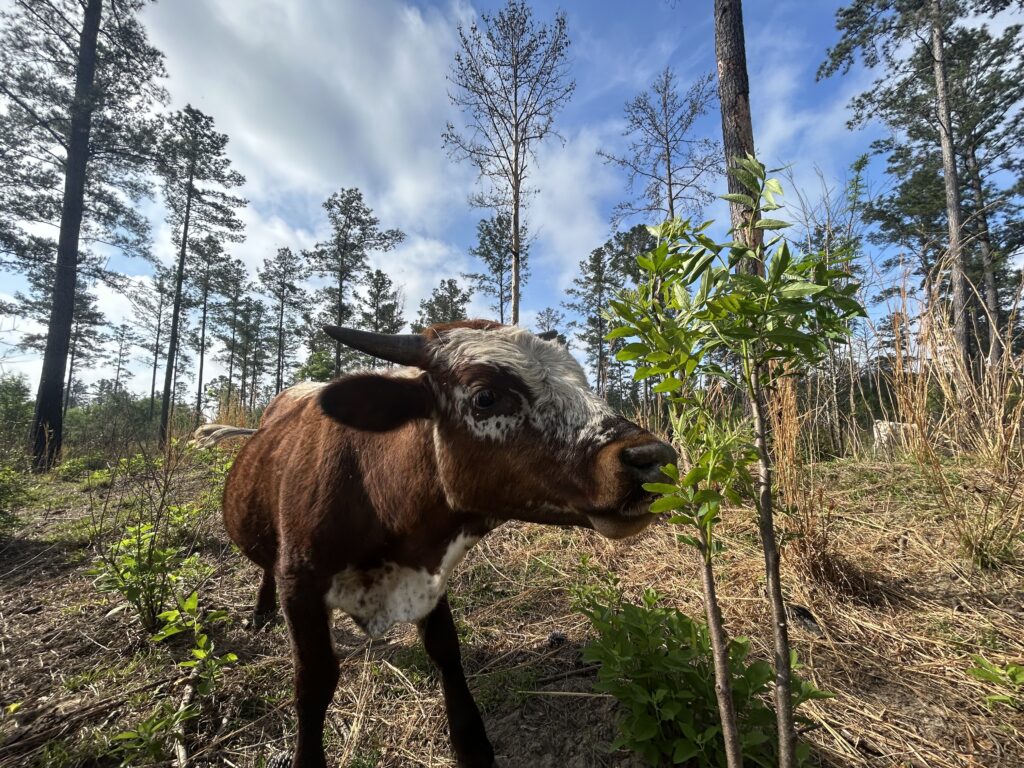
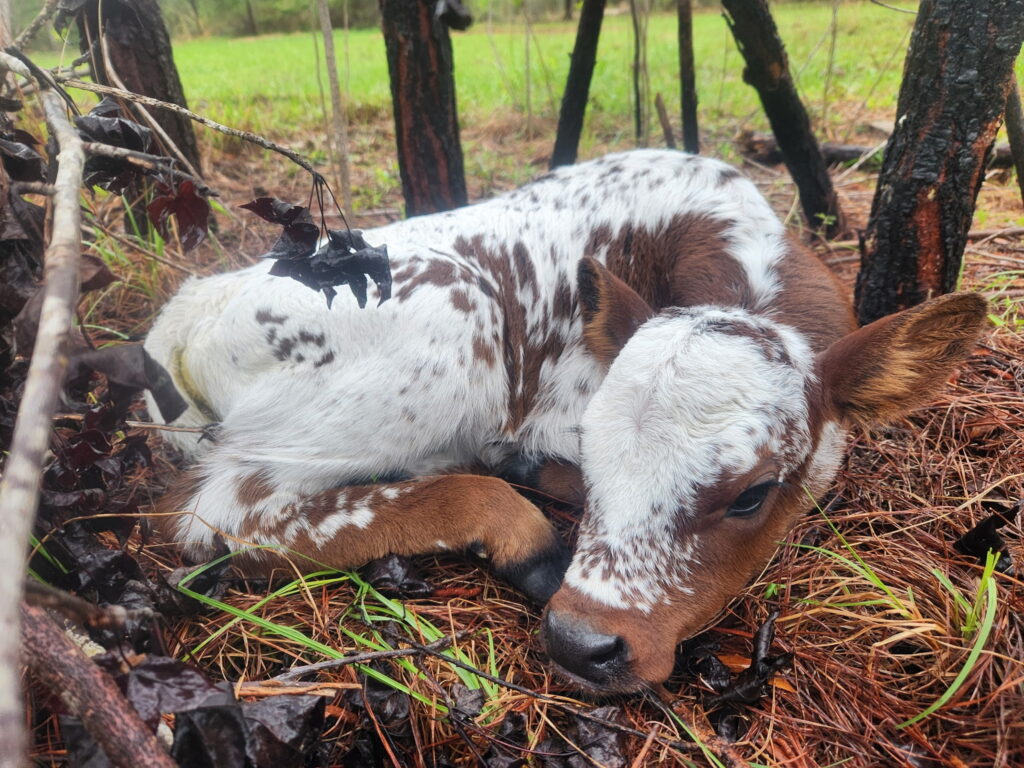
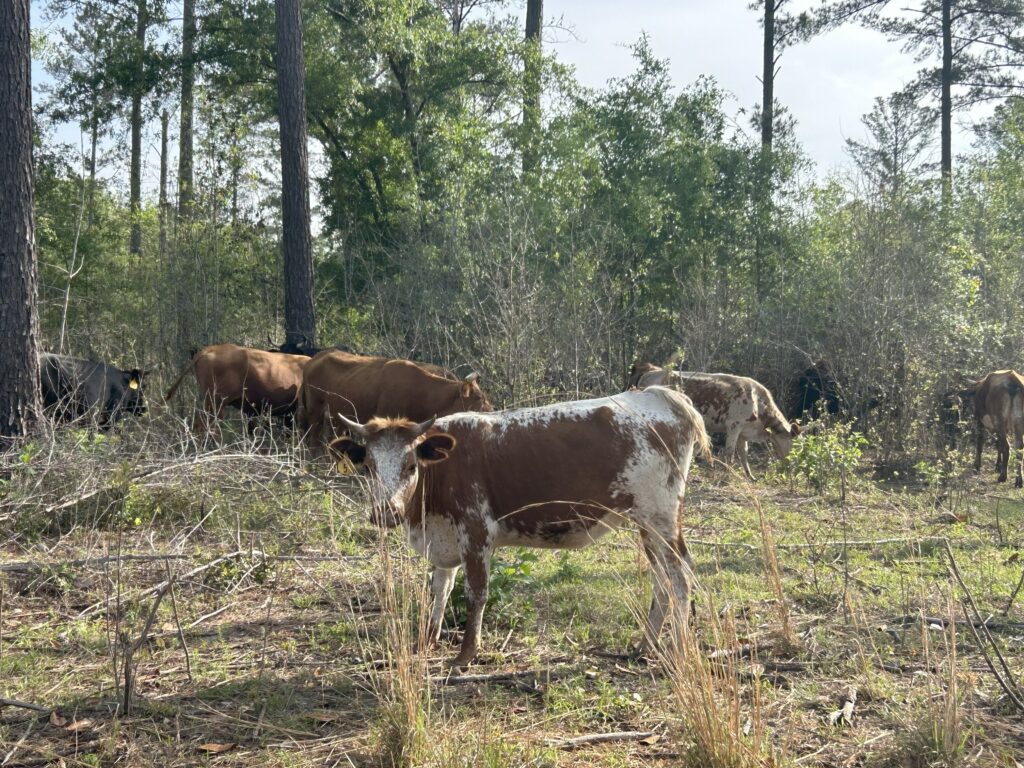
Florida Cracker cattle are one of the oldest breeds in the United States, descended from cattle brought to Florida by Spanish explorers in the 1500s. Over centuries, they adapted to the state’s heat, humidity, and landscape by foraging on native grasses, shrubs, and seasonal fruits. Once roaming wild, their hardiness and ability to thrive on Florida’s natural forage made them central to early ranching. Today, they are recognized as a rare heritage breed, and we are working to preserve their legacy for future generations.
Living on Florida’s Forage
For centuries, Florida Cracker cattle survived not on planted pastures, but on the wild, native plants of this region. Brought by Spanish explorers and left to roam, they adapted to Florida’s heat, humidity, and sandy soils by foraging on whatever the land provided, becoming one of the hardiest breeds in America.
Their menu was as diverse as Florida’s ecosystems. They grazed on native grasses, but also browsed woody plants and vines: winged sumac, sweetgum, muscadine vines, sweetleaf, and many more.
This instinct to forage widely helped them endure droughts, storms, and lean seasons, shaping a breed deeply tied to Florida’s natural landscape.
Preserving a Rare Breed
Florida Cracker cattle are now considered a threatened heritage breed, with only a limited number remaining across the state. At River Woods Ranch, we are proud to be part of the effort to protect and grow their numbers.
By keeping a dedicated herd, we’re not only preserving their genetics but also carrying forward the cultural history they represent.
Each animal is a living link to Florida’s earliest ranching traditions, and by raising them on the land where they belong, we ensure this rare breed continues to thrive for future generations.
Sustainable Land Management
At River Woods Ranch, the Cracker cattle are more than a historic herd — they’re partners in land stewardship.
Through rotational grazing, we mimic the natural movement of wild herds, giving pastures time to rest and regrow. Their manure serves as a natural fertilizer, returning nutrients to the soil and supporting healthy forage.
This cycle not only enriches our pastures but also helps us build a resilient ecosystem where cattle, plants, and people can all flourish together.
Our Local Processing Partner
All of our beef is processed at Perdido River Farms Meats in Atmore, Alabama, a USDA-inspected facility. Their team takes great care in ensuring quality and food safety, giving us confidence that every cut meets the highest standards. By working with a trusted local processor, we’re able to provide meat that is not only delicious, but also responsibly handled from pasture to plate.